



Choosing a hybrid vs off-grid solar system starts with the customer’s electricity supply, connected loads and backup requirements.
For distributors and installers, the 6kW hybrid solar system offers grid-connected operation, battery backup and diesel generator integration. The 6.5kW off-grid solar system provides another configuration for projects requiring independent solar and battery supply.
Both packages include a nominal 10kWh LiFePO4 battery. However, their inverter functions and supplied solar panel capacities differ.
System Configuration Comparison
The following comparison helps installers evaluate a hybrid vs off-grid solar system using the actual equipment supplied.
| Specification | Hybrid Package | Off-Grid Package |
|---|---|---|
| Inverter | Deye SUN-6K-SG03LP1-EU | LS-PV9KB48S6K5 |
| Rated AC output | 6kW | 6.5kW |
| AC output voltage | Single-phase 220/230V | 208/220/230/240V |
| Battery storage | 10kWh LiFePO4, 51.2V | 10kWh LiFePO4 |
| Inverter battery system | Low-voltage battery connection | 48V nominal |
| Solar panels | 9 × 620W | 8 × 580W |
| Supplied PV capacity | 5.58kWp | 4.64kWp |
| Main operating functions | Grid-connected operation, backup and generator integration | Off-grid supply with battery storage and AC input |
The off-grid inverter’s rated output reduces to 90% when its output voltage is set to 208V.
When to Choose the Hybrid Package
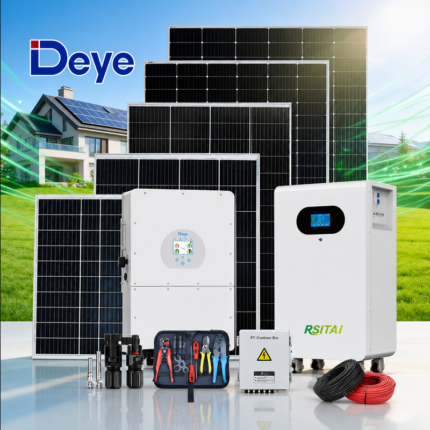
The 6kW hybrid solar system is suitable for consideration when a project has a grid connection and requires solar generation with battery backup.
Its Deye inverter supports grid-connected operation, backup supply and diesel generator integration. Before preparing the installation plan, confirm:
- The required operating mode and local grid requirements.
- Which circuits need power during an outage.
- Continuous load and motor starting demand.
- Whether a diesel generator will be connected.
- Battery compatibility and discharge capability.
For an installer comparing a hybrid vs off-grid solar system, the need to operate alongside the electricity grid is an important selection factor. Grid export permissions, protection arrangements and backup circuit design must be confirmed for each project.
View the Deye hybrid package and full specifications.
When to Choose the Off-Grid Package
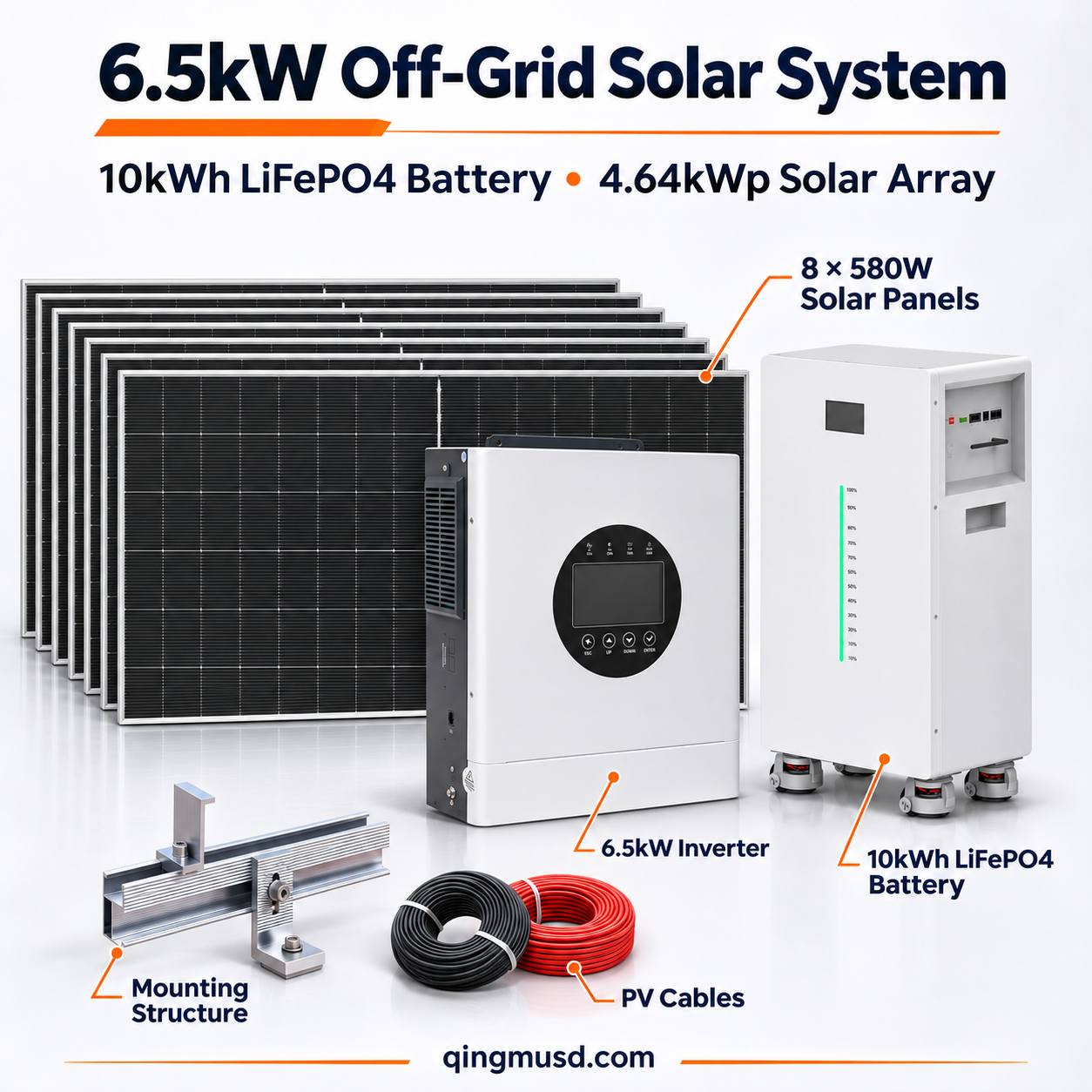
The 6.5kW off-grid solar system is suitable for consideration when a customer needs an independent solar and battery supply.
The package includes an LS-PV9KB48S6K5 inverter, eight 580W panels and a nominal 10kWh LiFePO4 battery. Its built-in MPPT solar charger supports a maximum PV charging current of 120A.
Before installation, check PV string voltage, cable sizing, battery compatibility and protection equipment. The inverter has an IP21 protection rating and requires an appropriate indoor environment.
The inverter also has AC input operating modes. AC input availability should not be treated as confirmation that the equipment can export electricity to the grid.
View the off-grid package and full specifications.
Inverter Output and Solar Panel Capacity Are Different
The 6kW hybrid solar system includes 5.58kWp of panels, while the 6.5kW off-grid solar system includes 4.64kWp.
A higher inverter output rating does not automatically mean a larger solar array or higher daily solar generation.
Compare these ratings separately:
- kW: inverter output power.
- kWp: rated solar panel array capacity.
- kWh: nominal battery energy storage.
Actual generation depends on sunlight, shading, orientation, temperature and system losses. Panel string arrangements must remain within the inverter’s voltage and current limits.
How Long Can a 10kWh Battery Provide Backup?
Battery backup duration depends on usable battery energy, average load, discharge settings and conversion losses.
For an initial estimate:
Backup time ≈ usable battery energy × conversion efficiency ÷ average load
Lighting and office equipment will have different requirements from pumps, air conditioning or workshop machinery. Starting demand must be checked separately from normal running power.
A nominal 10kWh battery rating alone cannot establish backup time or confirm that every connected appliance can operate simultaneously.
For projects requiring additional storage, review our 16kWh LiFePO4 battery. Compatibility and the final configuration must be confirmed before changing the supplied battery.
Frequently Asked Questions
Which package should installers recommend?
Recommend the 6kW hybrid solar system when its grid-connected, backup and generator functions match the project. Consider the 6.5kW off-grid solar system when its independent supply arrangement and equipment specifications meet the customer’s requirements.
Can either package run every appliance during an outage?
The combined load must remain within the inverter’s output limits and the battery’s discharge capability. Motor starting demand, protection settings and circuit design also affect operation.
Can the panel configuration be changed?
Alternative panel configurations can be reviewed. The panel quantity and string arrangement must meet the selected inverter’s MPPT voltage, current and maximum PV open-circuit voltage limits.
Request a Project-Based Quotation
To select a hybrid vs off-grid solar system, send your installation country, voltage and frequency, load list, required backup hours, grid availability and generator requirements.
Distributors and installers should also include order quantity, mounting conditions and delivery destination. These details help us prepare a suitable equipment configuration and quotation.